AGP Executive Report
Last update: 4 days agoIn the past 12 hours, Namibia Travel Press coverage has been dominated by domestic service delivery and education upgrades, alongside a steady stream of conservation and tourism-related updates. The government launched a National Customer Service Excellence Initiative at ports of entry, with Environment, Home Affairs/Immigration, and the Namibia Tourism Board working together to improve professionalism, accountability and visitor experience. In education, a new computer laboratory was inaugurated at Petrus !Ganeb Secondary School in Uis (funded by Swakop Uranium Foundation), aimed at narrowing the digital divide and improving access to practical science and computer studies.
Sports and youth development also featured prominently. The Namibia Football Association (NFA) unveiled an expanded 2026 NFA Cup intended to cover “all levels” of Namibian football, with 740 clubs and 21,950 registered players across 14 regions—a major scaling-up of competitive opportunities. At the same time, the coverage shows the rollout is not without friction: Bucks Buccaneers withdrew from the Cup, citing financial constraints and the cost of meeting player salary and operational obligations. Separately, Namibia is set to host a CAF B Coaching Licence course for local coaches, reinforcing a focus on building coaching capacity within the country.
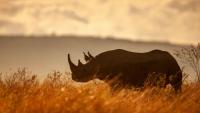
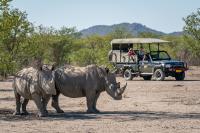
Conservation and wildlife crime remain urgent themes. Recent reporting includes rhino poaching arrests tied to seven rhinos killed in Etosha and a nearby farm, with pensioners among those arrested, and a separate update that Namibia recorded eight rhino poaching incidents in the first four months of 2026 (seven in Etosha, one on a private farm). The coverage also highlights ongoing rehabilitation and species pressure: an African penguin (AP002) was released near Lüderitz after 49 days of care, while the broader context notes steep declines in Namibia’s breeding pairs over recent decades.
Beyond Namibia, the most notable “international” item in the last 12 hours is a health-and-travel crisis: a cruise ship (MV Hondius) in the Atlantic has had suspected/confirmed hantavirus cases, with deaths reported and health authorities racing to test samples and manage evacuations. This sits alongside other travel-facing stories in the wider 7-day set, including tourism market positioning (e.g., “China-ready” destination rankings) and aviation disruption risk from jet fuel shortages, but the hantavirus report is the clearest immediate travel-safety development in the most recent window.
Over the broader 7-day range, the pattern is continuity rather than a single turning point: Namibia continues to invest in tourism-facing systems (customer service, coaching development, and conservation enforcement), while also grappling with structural pressures—financial constraints in sport participation, persistent wildlife crime, and wider travel-sector risks. However, the evidence in the most recent 12 hours is strongest for policy/service launches and conservation enforcement, whereas major tourism or infrastructure shifts are more thinly corroborated in that same window.
Note: AI summary from news headlines; neutral sources weighted more to help reduce bias in the result.